
- Opening the New Sadao Checkpoint with the Old Sadao Checkpoint remains opened
- Effective 2025-May-01 All passengers must complete the Thailand Digital Arrival Card TDAC
Thailand – Malaysia border Checkpoints
There are 7 land border checkpoints between Thailand and Malaysia. Officially it is called ICQS, which is abbreviation of “Immigration, Customs, Quarantine, and Security Complex”. Namely, Sadao / Bukit Kayu Hitam, P. Besar / P. Besar, Betong / Bukit Berapit (Pengkalan Hulu), Sungai Kolok / Rantau Panjang, Ban Prakob / Kota Putra (generally known as Durian Burung), Wang Prachan / Wang Kelian and Buketa / Bukit Bunga.
Sadao / Bukit Kayu Hitam checkpoint is the busiest among all due to its geographical convenience and connectivity between the two countries at the main expressway, Kanjanavanich Road in Thailand and North-south Expressway, NSE (E1) in Malaysia. Both are also part of AH2 (Asian Highway route 2). Sadao / Bukit Kayu Hitam checkpoint is also the most popular checkpoint among visitors going to Hat Yai, the largest metropolitan in the south of Thailand.
The second busiest checkpoint shall be Padang Besar Checkpoint, which is also the checkpoint for travelers using railway trains.
Thirdly, the less popular checkpoint is Kota Putra in Kuala Nerang, because of its longer distance and 45 minutes more traveling time. It is called Ban Prakob in Thailand, Na Thawi district. Where motorist can continue to the north via route 408. Then, at the Na Thawi town, either continue north via Chana district or take the left turn route 42 via Sadao district. However, it’s still a good alternative choice during weekend or Public Holiday, when the two busiest checkpoints would incur queuing time of more than an hour.
Thailand-Malaysia border checkpoint Opening / Closing Times
The earliest opening time for Thailand / Malaysia Border Checkpoints start from 06:00 (05:00 Thai Time) in the morning, checkpoints including Sadao / Bukit Kayu Hitam, Padang Besar, Betong / Bukit Berapit, Sungai Kolok / Rantau Panjang and Bukketa / Bukit Bunga.
Border Checkpoints Closing at 00:00 (23:00 Thai Time) is the longest opening time among all the checkpoints, which is Sadao / Bukit Kayu Hitam checkpoint. Follow by Betong / Bukit Berapit checkpoint at 23:00 (22:00 Thai Time). Padang Besar and Sungai Kolok / Rantau Panjang checkpoints closing at 22:00 (21:00 Thai Time). Wang Prachan / Wang Kelian and Bukketa / Bukit Bunga checkpoints closing at 19:00 (18:00 Thai Time).
The earliest closing checkpoint at 17:00 (Thai Time) at Ban Prakob / 18:00 (Malaysian Time) Kota Putra checkpoints.
Border checkpoint Opening / Closing Times

Opening & Closing Times, Bukit Kayu Hitam – Sadao, Padang Besar, Burung Durian (Kota Putra)
Thailand / Malaysia
Border Checkpoints
(1) Sadao (Dannok) / Bukit Kayu Hitam
(2) Padang Besar / Padang Besar
(3) Ban Prakob / Kota Putra (Durian Burung)
(4) Betong / Bukit Berapit (Pengkalan Hulu)
(5) Wang Prachan / Wang Kelian
(6) Sungai Kolok / Rantau Panjang
(7) Buketa / Bukit Bunga
(8) Tak Bai / Pengkalan Kubor (*by Ferry)
Border Checkpoint
Open / Close
(1) 06:00 / 00:00
(2) 06:00 / 22:00
(3) 08:00 / 18:00
(4) 06:00 / 23:00
(5) 08:00 / 19:00
(6) 06:00 / 22:00
(7) 06:00 / 19:00
(8) 06:00 / 19:00
*UTC +8 Malaysia Time
Bukit Kayu Hitam
- Bukit Kayu Hitam was a small border checkpoint in Kedah state of Malaysia, become well-known by travellers only after the road between Jitra – Bukit Kayu Hitam section completed upgrading in 1985, and started toll ticket system
- However, the road between Jitra – Bukit Kayu Hitam section does not comply with the expressway standards defined by the Arahan Teknik 8/86. Thus, the max speed limits is restricted at 90 km per hour, compared to 110 km/h for the Plus Highway
- Bukit Kayu Hitam Border Checkpoint overtakes Padang Besar become the main gateway between Malaysia and Thailand for many motorists, especially after the NSE, North–South Expressway E1, completed construction in 1994. NSE is generally known as PLUS Highway, which is also part of the Asian Highway route 2, AH2
- Across the border to the north is Sadao border checkpoint of Songkhla province in Thailand. A small town located further north is called Dannok, accessible via Kanjanavanich Road, which is also the main road leading to Hat Yai
- The nearest town to Bukit Kayu Hitam border is Changlun of Kedah state, located at about 7 km south of Bukit Kayu Hitam
Bukit Kayu Hitam Border Crossing (Malaysia to Thailand by car)
School holidays and Malaysia Day spark severe congestion at Bukit Kayu Hitam ICQS border
The Bukit Kayu Hitam Immigration, Customs, Quarantine and Security (ICQS) Complex is experiencing unusual congestion due to a surge in vehicles heading to Thailand during the school holidays and the long festive break.
“Movement statistics show that 21,971 individuals entered and exited through the ICQS Complex yesterday… of that, 4,941 individuals of various nationalities, including Malaysian, Thai, Indonesian, Chinese and Indian, entered Malaysia, while 17,030 individuals departed for Thailand,” Read more..
New Roads Linking Sadao – Bukit Kayu Hitam Border
@_husnainternational @_husnainternational Stanby to new area. Sadao custom House . ด่านศุลกากรสะเดาแห่งใหม่
High-tech border clearance at Sadao checkpoint
02 Oct 2025 The Star
The country will equip the new Sadao Customs, Immigration and Quarantine (CIQ) complex in Songkhla province with the latest technology to expedite traveller inspections.
Songkhla Governor Chotnarin Kerdsom said the new CIQ will connect to Malaysia’s Bukit Kayu Hitam Immigration, Customs, Quarantine and Security (ICQS) complex via a roadlink, which is expected to be completed by November.
“Once the new facilities are operational, both Thailand and Malaysia will use this checkpoint.
“Immigration equipment will be upgraded with modern technology to allow faster clearance for travellers.
“It will also enable quicker vehicle checks.
“At present, inspections take eight to 10 minutes per vehicle as passengers are required to disembark.
“With the new system, checks can be completed in about 30 seconds per vehicle,” he said on the sidelines of the Diplomatic Corps’ visit to Songkhla province.
He added that pedestrian screening will also be faster and more convenient with the new technology.
Meanwhile, Chotnarin said the operational date for the new checkpoint would be determined by the Regional Border Committee of both countries.
He noted that the relocation of the border checkpoint requires further procedures, including coordination between the Foreign Ministry and National Security Council.
Earlier, representatives of diplomatic corps from 21 countries who joined the “Visit Songkhla” programme, hosted by the Thai government from Sept 29 to Oct 1, had visited the new complex. — Bernama
Border Road Alignment with Thailand project to be sped up

SADAO CIQ Complex – Bukit Kayu Hitam Road Alignment Project
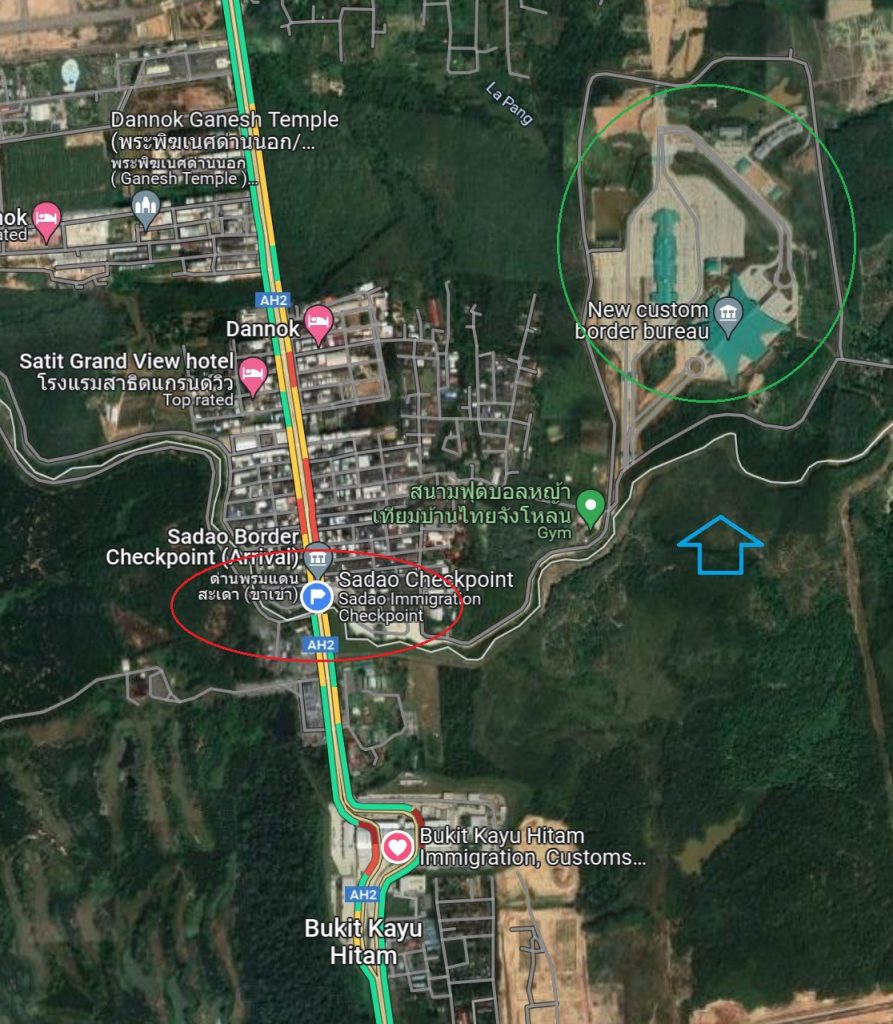
Location Map, New Sadao CIQ Complex
Opening the New Sadao – Bukit Kayu Hitam Checkpoint with the Old Sadao Checkpoint remains opened
@dr.ongong แนวทางการเปิดใช้งานด่านศุลกากรสะเดาแห่งใหม่คู่ขนานด่านศุลกากรเก่า(ปัจจุบัน) #ด่านศุลกากรสะเดาเเห่งใหม่ #ด่านสะเดา #dannok #sadaocustom #bukitkayuhitam
For passenger cars or small cars, can use either the New or the Old checkpoint.
Padang Besar
Padang Besar used to be the most important border town between Thailand and Malaysia, prior to the opening of Bukit Kayu Hitam border crossing checkpoint in 1977. Especially after the upgrading of Jitra–Bukit Kayu Hitam section in 1985, as part of the North-south Expressway.
Both of the towns in Thailand and Malaysia across the border are called Padang Besar. The only difference is, one written in Thai and the other one in Malay language.
Padang Besar is the major border town where railway crossing over the border between Thailand to Malaysia, The other railway crossing over the border is between Sungai Golok in Narathiwat Province and Rantau Panjang in Kelantan, but the service has been discontinued since 1978, which was opened and started operations since 1921.
International travelers by train perform Immigration, Custom, Quarantine and Security at the same premises located in Malaysia railway station terminal. The Padang Besar station in Thailand is serving for the local travelers only.
But, travelers bound for Thailand arrive at Padang Besar by train, and changing the transport mode to bus or van will have to perform the border crossing processes at Malaysian ICQS and Thai ICQS located in Thai border respectively.
Walking via the designated pedestrian walkway to cross the border takes about 20 minutes for the 1.2km distance in length.
Padang Besar Thailand – Padang Besar Malaysia Pedestrian Walkway
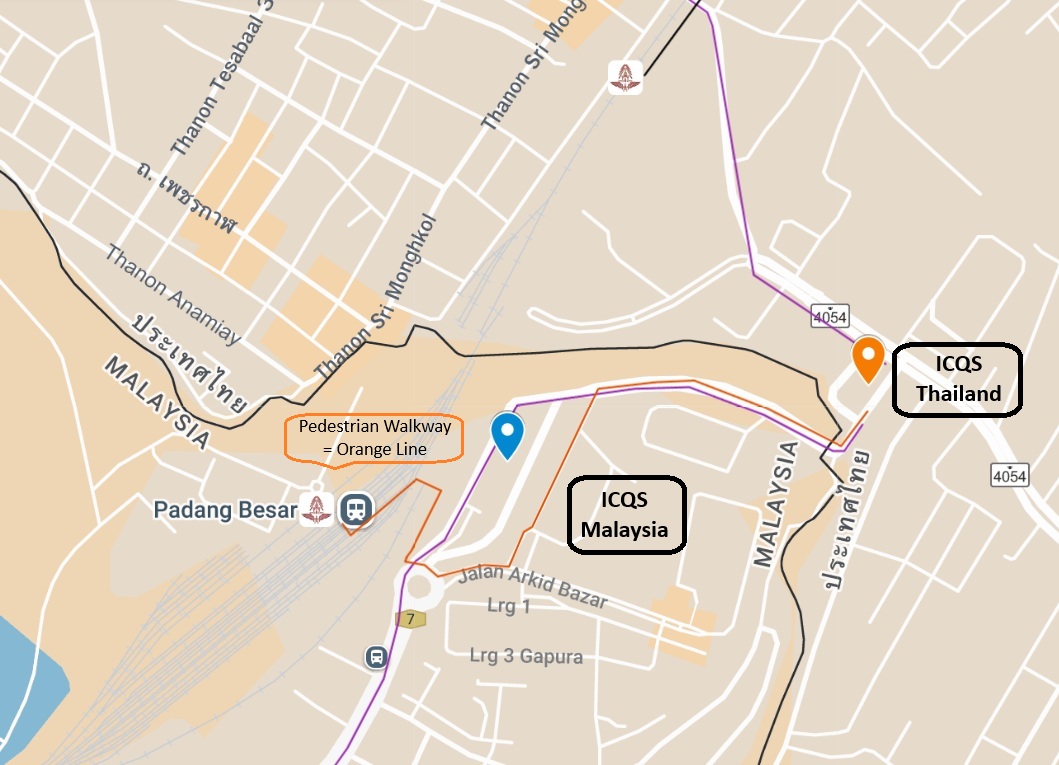
Thailand – Malaysia Border Crossing Walkway
Padang Besar Border Crossing (Malaysia to Thailand, use Minivan to Hat Yai)
[Kota Putra] Durian Burung – The secret border crossing into Thailand with no crowds and no stress
Hat Yai
Hat Yai is the largest metropolitan in southern Thailand, also the border hub adjacent to the borders of Malaysia. For its geographical lacation advantage, Hat Yai is not only the most popular vocation destination for Malaysian and Singapore.
Hat Yai is also business center and transportation hub in southern Thailand. Is the only district in Thaialnd, in which, Hat Yai district is more populous and more developed than the capital city – Songkhla City in Songkhla province.
Betong
Betong in Yala province is the southernmost town of Thailand, neighboring Pengkalan Hulu in Perak, Malaysia
Only less than 5 hours or 400 km drive from Kuala Lumpur. It is 90 minutes faster or 150 km nearer compared to Hat Yai in Songkhla province.
Make it a preferred alternative choice of destination for many vocation goers especially from Malaysia
- Betong is among the popular border towns to Malaysian, following Hat Yai, Sungai Kolok and Padang Besar
- Due to Mountaineous environment, it is well known for its high rainfall with the morning fog, a cool climate is one of the attractions
- Variety of the decent Chinese cuisine, Muslim cuisine and local foods surely satisfy their appetite of many people
- World’s largest Mailbox is the unique Landmark where many visitors would not want to skip
- The communist hideouts place, Piyamit Tunnel in Friendship Village is one of the attractions in Betong
- Well recognized Landmark of the town belongs to the Clock Tower and Mongkollit Tunnel
Bukit Berapit (Pengkalan Hulu) to Betong Border Crossing
Sungai Kolok – Rantau Panjang Border Crossing
Hat Yai – 5 minutes walking tour
Thailand Digital Arrival Card TDAC
- The Thailand Digital Arrival Card [TDAC] is an online form that replaces the traditional paper-based arrival card (TM6) for international travelers entering Thailand.
- To submit the Digital Arrival Card, foreigner can access the Immigration Bureau website URL: https://tdac.immigration.go.th
- Alternatively, you can use Touch’nGo e-Wallet to submit the Digital Arrival Card at your convenience.
- The card should be submitted within three 3 days in advance of arriving in Thailand (including the date of arrival).
- All passengers must complete the Thailand Digital Arrival Card. (Effective 01-May-2025)
- If the alien stays in the Kingdom longer than 90 days, he/she must notify in writing the nearest Immigration Officer, concerning place of stay, as soon as possible upon expiration of 90 days. And required to do so every 90 days.
- Aliens are not allowed to work unless they are granted Work Permit.
Source: Immigration Bureau – Royal Thai Police
Fill-up Arrival Card Thailand using Touch’nGo e-Wallet
With Touch’nGo e-Wallet, it is another way to fill-up Thailand Digital Arrival Card up to 3 days before your departure date. Just follow this simple steps on how to fill-up Arrival Card before arriving at the border checkpoint.
Open your Touch’nGo app, on the left-top corner of the screen, you can
Switch location for exclusive services and deals, tap on it and select Thailand. For Malaysian, it is Malaysia by defaul:
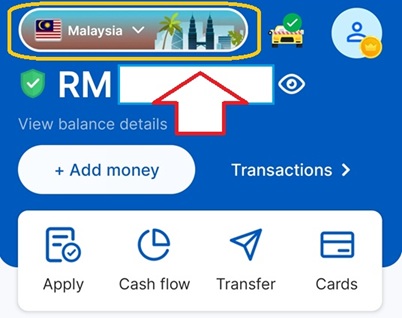
Fill up Arrival Card Thailand step 1
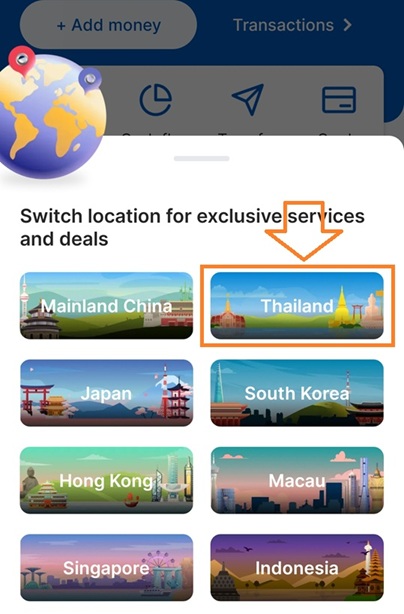
Fill up Arrival Card Thailand step 2
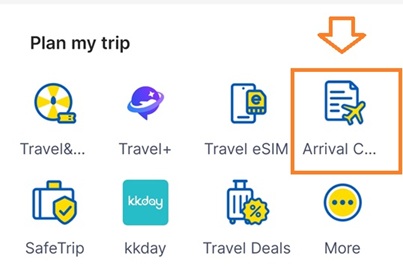
Fill up Arrival Card Thailand step 3
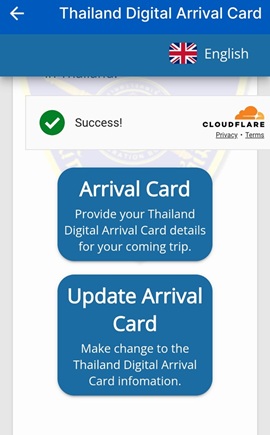
Fill up Arrival Card Thailand step 4
Select Arrival Card or Update Arrival Card, fill-up the form and submit accrdingly.
Documents required for Border Crossing with Own Vehicle
Standard Documents Required to enter Thailand by Car
- TM2 Information of Conveyance Form – 2 copies (inbound and outbound)
- TM3 Passenger List Form (for passengers) – 2 copies (inbound and outbound)
- Valid Driving License – Malaysia (ASEAN*) or International
- Vehicle Ownership Certificate – VOC (Sijil Pemilikan Kenderaan) – ORIGINAL
- Simplified Customs Declaration Form
- Photocopy of road tax – to check validity
- 3rd Party Insurance – Compulsory
- TM6 Arrival/Departure Card (white card) *suspended & replaced with TDAC (Thailand Digital Arrival Card)
- Passport – minimum 6 months validity
*With original Vehicle Ownership Certificate – VOC, Thai customs will verify all the required documents and issue a Temporary Import/Export Permit (Declaration Form) in order for you to drive your car into Thailand legally. IMPORTANT: If you fail to re-export the vehicle within the specified time-limit, a fine of 1,000 baht per day could be imposed by Thai Customs. Or, it is the same consequences if you failed to return the Declaration Form when leaving Thailand.
Additional Documents if your car registered under other’s name
# Authorization letter from the vehicle’s owner and copy of the owner’s passport/identification card
# If car registered under company’s name: Form 24 & FORM 49.
Procedures and Important Notes
- Drivers and passengers get their passports and TM6 Arrival/Departure Card (white card) stamped at Drive-through counter.
- Proceed to park your car at parking lot before “Temporary Importation of Motor Vehicle” counter.
- Provide passport, Registration Card / Vehicle Ownership Certificate & other documents to the customs officer at STEP 1 then STEP 2 windows
- The officer will print out a “Simplified Customs Declaration Form” (“temporary vehicle import/export form”), for your keeping. Sign on the two sections of the form as indicated.
- Submit and sign Customs Form TM2 and TM3
- Get the stamped copy of the TM2 and TM3 forms from the officerNote:
- Pay RM3 or 25 Baht during Non-office Hours (06:00~08:30, 12:00~13:00, and 16:30~00:00 or on PH & weekends).
- Keep this form during your entire journey in Thailand. The form is Valid for 30 days.
- Must return SCDF, TM2 and TM3 forms to the customs officer when leaving Thailand.
- If you failed to return the “Simplified Customs Declaration Form” TM2 and TM3 within 30 days, Not negotiable penalty is 1,000 Baht a day, up to maximum 10,000 Baht.
Singaporean crossing into Thailand via Malaysia-Thailand Land Border Checkpoints:
With effect from 31-Dec-2016, Singaporean visitors entering Thailand through land border checkpoints without Visa has been limited to twice in a calendar year for stay of not exceeding 15 days each. The third entering overland, will need to obtain a Visa.
Car Insurance Requirements Driving your Own Car abroad
| Classes of Voluntary / Optional Car Insurance Coverage in Thailand | ||||||
| Type 1 | Type 2+ | Type 3+ | Type 2 | Type 3 | ||
| Third party liability coverage | ||||||
| Damages to 3rd party property | Yes | Yes | Yes | Yes | Yes | |
| 3rd party Bodily Injuries | Yes | Yes | Yes | Yes | Yes | |
| Own Vehicle Coverage | ||||||
| Collision with 3rd party | Yes | Yes | Yes | No | No | |
| Collision without 3rd party | Yes | No | No | No | No | |
| Windscreen | Yes | No | No | No | No | |
| Towing | Yes | Yes | Yes | No | No | |
| Theft, Fire & Disaster | ||||||
| Theft | Yes | Yes | No | Yes | No | |
| Fire | Yes | Yes | No | Yes | No | |
| Disaster, Floods | Yes | Yes | No | No | No | |
| Additional Coverage | ||||||
| Medical Expenses | Yes | Yes | Yes | Yes | Yes | |
| Accident Disability | Yes | Yes | Yes | Yes | Yes | |
| Bail Bond | Yes | Yes | Yes | Yes | Yes | |
Driving a car in Thailand requires a comprehensive overview of the legal requirements for car insurance, the different types of policies, and what to do in case of an accident.
Navigating Thailand’s Roads: A Guide to Car Insurance
Driving in Thailand can be an exhilarating experience, but it comes with unique risks and responsibilities. Whether you are a resident expat or a tourist on a road trip, understanding the local car insurance landscape is crucial for your safety and legal compliance. This guide will walk you through the essentials of car insurance in the Kingdom.
1. The Two Pillars of Thai Car Insurance
Car insurance in Thailand is categorized into two main types: compulsory and voluntary or optional. You’ll need both for comprehensive protection.
A. Compulsory Motor Insurance (Por Ror Bor)
This is the minimum, legally required insurance for all vehicles on the road in Thailand. Its purpose is to provide basic financial protection for individuals involved in a car accident, regardless of who is at fault.
What it covers:
- Por Ror Bor focuses on bodily injury and death.
- It provides compensation for medical expenses and benefits for death or permanent disability to the driver, passengers, and pedestrians.
What it doesn’t cover:
- This policy Does Not cover any damage to vehicles or property.
- The fine for non-compliance: Driving without valid Por Ror Bor insurance can result in a fine of up to THB 10,000.
B. Voluntary Car Insurance
- While Por Ror Bor is mandatory, its limited coverage makes voluntary insurance a non-negotiable for most drivers. This is where you protect your own assets and secure peace of mind. Voluntary policies are further broken down into several “classes,” each offering different levels of protection.
- Type 1 (Comprehensive): The most extensive coverage available. It covers damage to your own vehicle in a wide range of scenarios, including collisions (even when no third party is involved), theft, fire, and natural disasters. It also includes coverage for third-party property damage and personal accident and medical expenses for you and your passengers.
- Type 2+: A more affordable option that covers your vehicle for damage resulting from a collision with another vehicle (where the other party is identified), theft, and fire. It also provides third-party liability coverage.
- Type 3+: This policy covers your vehicle for damage only if the accident involves a collision with another vehicle and the other party is known. It provides third-party liability but does not cover theft or fire.
- Type 2: This policy primarily covers third-party liability, as well as theft and fire for your own vehicle, but does not cover accident-related damage to your car.
- Type 3: The most basic voluntary plan. It only covers third-party property damage and bodily injuries. Your own vehicle is not covered for any damage. (Engage with your insurance company at home for a Coverage Extension of your policy is highly recommended for your own vehicle’s damage protection)
2. Making a Claim: A Step-by-Step Guide
In the event of an accident, your actions immediately following the incident can significantly impact your claim. Here’s what you should do:
1. Prioritize Safety: First, check for injuries. If anyone is hurt, call emergency services (1669 for ambulance) and the police (191) immediately.
2. Contact Your Insurer: This is the most crucial step. Do not move your vehicle (unless it’s a minor fender-bender obstructing traffic) until your insurance company’s representative arrives. Most Thai insurance companies have a 24/7 hotline. The representative will act as a mediator, assess the scene, and guide you through the process.
3. Document Everything: Take clear photos and videos of the accident scene, including the position of all vehicles involved and the extent of the damage. If you have a dashcam, save the footage. Exchange contact and insurance details with the other driver(s) involved.
4. Do Not Admit Fault: Wait for the insurance representative to arrive. They will determine liability. Do not sign any documents or accept any liability without their assistance.
5. File the Report: The insurance representative will issue an accident report and a claim form. You will need to submit this along with other documents (such as your driver’s license, passport, and car registration) to the insurance company to proceed with the claim.
3. Key Considerations for Foreign Drivers
- Foreigner driving in Thailand must have the mandatory Por Ror Bor insurance.
- If you bring a foreign-registered car into the country, you may also be required to have at least a third-class voluntary insurance policy. It’s also worth noting that in Thailand, a No Claims Bonus (NCB) is typically tied to the vehicle, not the driver.
- For peace of mind on the often-unpredictable Thai roads, a comprehensive Type 1 policy is strongly recommended. It is a worthwhile investment that can protect you from significant financial and legal headaches in the long run. Always carry a copy of your insurance policy and a valid driver’s license when driving.
Emergency Contacts in Thailand
General Hotline: 191 (Police)
Ambulance: 1669 (Medical)
Tourist Police: 1155
Highway patrol: 1193

Sadao Departure Boundary Post
Sadao Checkpoint

Arrival Boundary Post – Sadao
Sadao Checkpoint

Mini Van to Hat Yai
7-ELEVEn Sadao (Dannok) checkpoint

Bukit Kayu Hitam – Sadao Border
Thailand – Malaysia Border

Non-office hour charges – Sadao Immigration
Non-office hours charges

Malaysia Checkpoint
Bukit Kayu Hitam Checkpoint
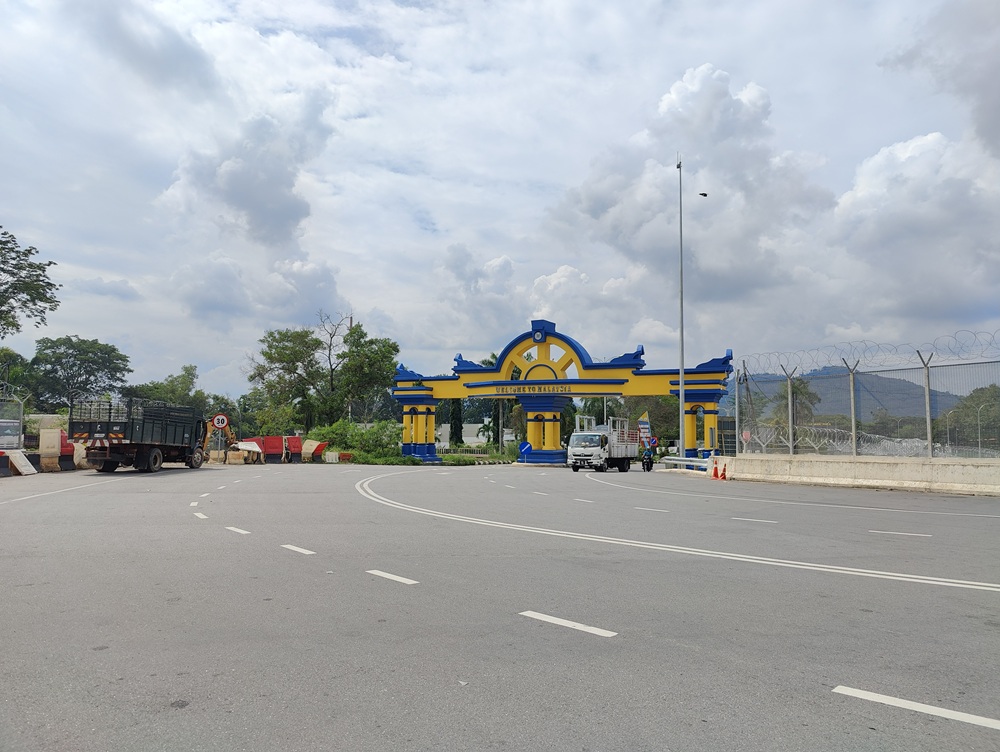
Welcome to Malaysia
from ICQS Thailand, Welcome to Malaysia
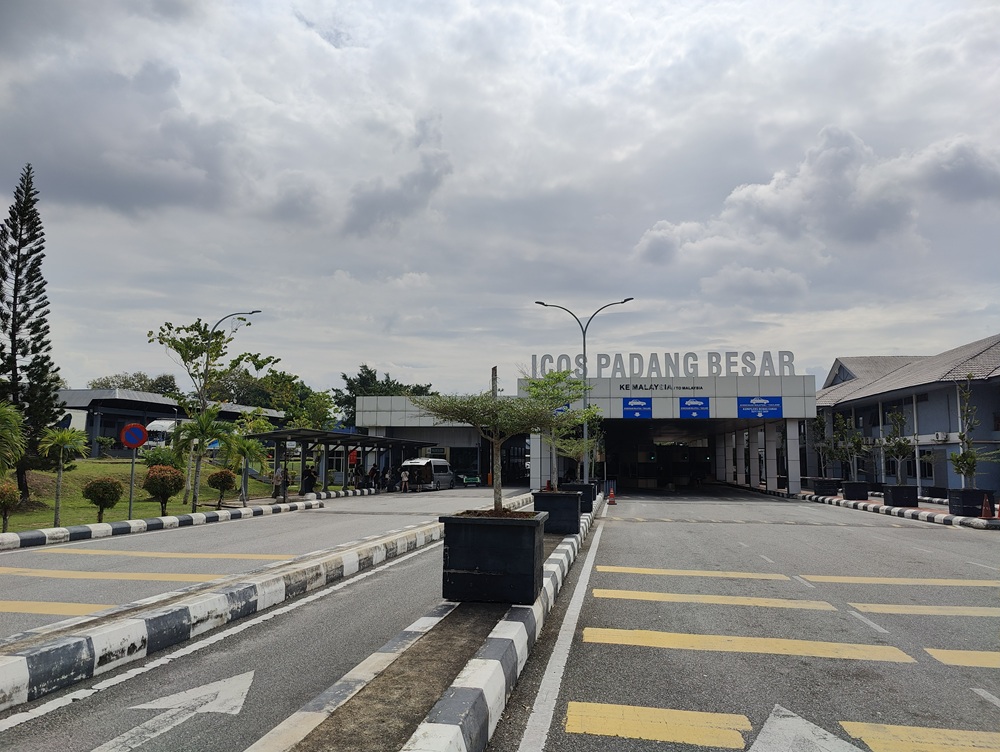
ICQS Padang Besar
ICQS Padang Besar, Malaysia
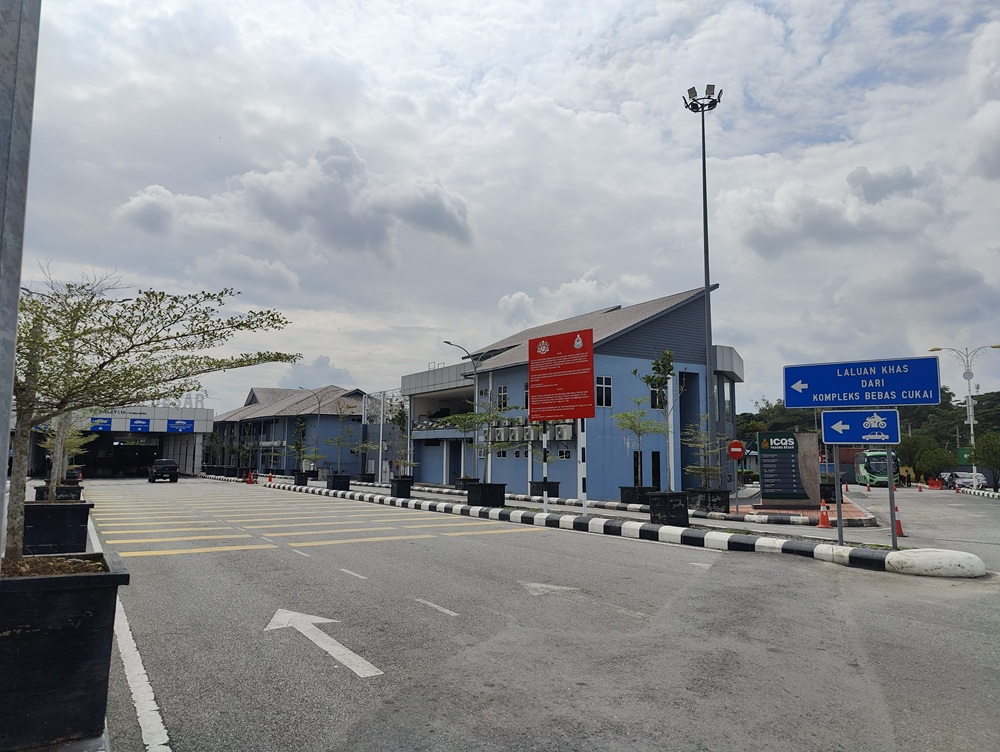
Way to Malaysia ICQS
from ICQS Thailand to Malaysia
Border Pass (PAS LINTAS SEMPADAN MALAYSIA – THAILAND)
Purpose
This document is issued to Malaysian citizens born or resident for more than one (1) year in the states of Kedah, Perlis, Kelantan and Hulu Perak District (Pengkalan Hulu, Grik dan Lenggong) only.
Travel Limit
This pass is substantial for movement from the border states to southern Thailand in particular Satun Province, Songkhla, Yala, Narathiwat and Pattani.
Validity
One (1) year from the date of issue and might be utilized for numerous excursions. The legitimacy time frame can’t be expanded.
Malaysia – Thailand Border Pass Validity Period for Exit to Thailand. The validity period of the Border Pass must be not less than 30 days before the trip out to Thailand.
Application Requirements
Above 18 years old
- One (1) copy of applicant’s recent photograph
- White background
- Hair does not cover the forehead
- Dark veil/hood/hijab (Muslim women)
- Application form
- Identification Card
- Previous Border Pass (if any)
*Husband and wife need to apply for Border Pass separately
Below 18 years old
- One (1) copy of applicant’s recent photograph
- White background
- Hair does not cover the forehead
- Dark veil/hood/hijab (Muslim women)
- Application form
- Identification Card
- Form A1/B1 – parental consent form
- Previous Border Pass (if any)
Below 12 years old
- One (1) copy of applicant’s recent photograph
- White background
- Hair does not cover the forehead
- Dark veil/hood/hijab (Muslim women)
- Application form
- Birth Certificate
- Form A1/B1 – parental consent form
*Accompany with mother or father
Source: Immigration Department of Malaysia
Insurance extensions, or coverage extensions
Coverage Extension is regarding extending Malaysian vehicle insurance to use in Thailand. It is also known as Extension 101
- The Extension only covers property damage, not bodily injury
- Minimum duration is 1 week
- How long does it take to apply? 24 hours
- Applicable to Comprehensive policy Only
- No age limit
Claim Procedures of Extension Coverage:
- Make a police report (a must) immediately
- Arrange to tow your car to Malaysian border (not covered by Extension)
- The insurance company covers the cost of towing from Malaysian border
- The damage have to be repaired in Malaysia
- The 3rd party need to repair and pay on their own, for the car first
- The 3rd party claims may take up to 6 months
Note: The above is for reference only. Every insurance company has their own policies.
Emergency Numbers in Thailand:
- Emergency Hotline 191
- Tourist Police 1155
- Medical 1669
- Highway Patrol 1193